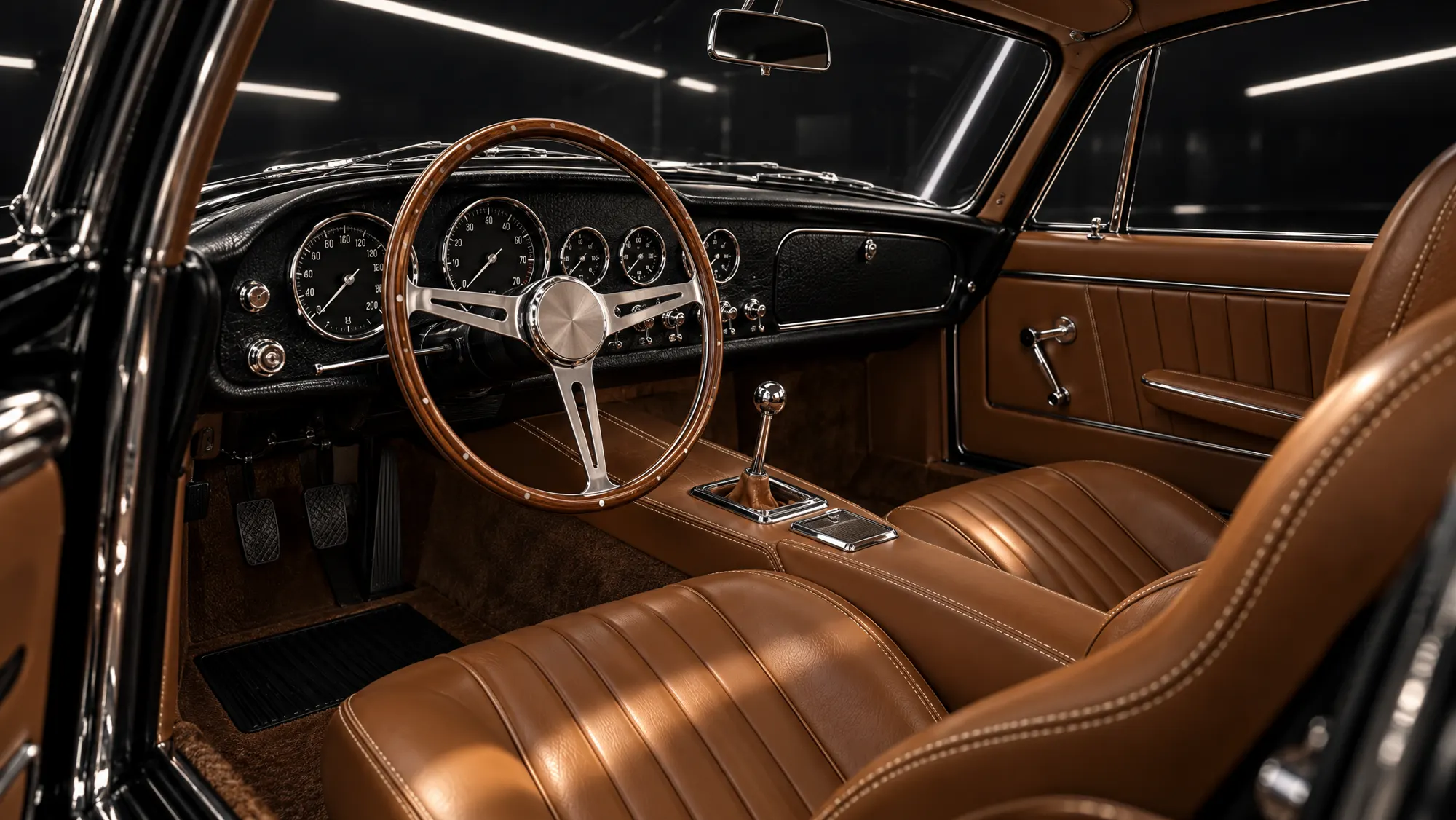
Clean a car interior from the top down and from dry to wet: empty it, vacuum, wipe the hard surfaces, treat the seats and carpet, then do the glass and let everything dry. That order means dust and crumbs fall onto areas you haven’t cleaned yet, not the ones you just finished.
The single most useful habit is doing all the dry work before any liquid comes out. Wet cleaner turns loose dust into mud, and it’s much harder to lift mud out of fabric than to vacuum dust.
Time: Most of an afternoon, plus drying time.
Difficulty: Easy, but it’s a workout.
What you need
- A vacuum with crevice and brush attachments (here’s what to look for)
- A trash bag, plus a box for things that belong back in the house
- A stack of clean microfiber towels
- A soft detail brush
- A car interior cleaner, or a mild soap in warm water
- Upholstery or leather cleaner, depending on your seats
- Glass cleaner
- Gloves, if a product label says to wear them
Three warnings before you start
Keep water out of the cabin’s electrics. Mazda’s manual warns that water getting inside the car can reach parts like the audio system and switches, which can cause a malfunction or even a fire. Spray cleaner onto the towel, not onto the car. Never hose out an interior.
Don’t mix chemicals, and leave bleach out of it. Mixing bleach with ammonia makes toxic chloramine gas, and mixing it with acids such as vinegar gives off chlorine gas, according to the Washington State Department of Health. Mazda also warns against using chlorine bleach, alcohol or organic solvents inside the car because they can discolor or stain it. Keep the doors open while you work, follow each label, and wear gloves when the label says to.
Be gentle around airbags. Airbag covers on the steering wheel and dash, and the sides of seats that hold side airbags, should get a lightly damp cloth and nothing more. Jaguar’s manual warns that any substance getting into the airbag mechanism can stop it deploying correctly. Don’t take a seat out just to clean under it. Slide it forward and back instead.
The order of operations
- Empty everything. Take out the trash, the loose change, the car seats for kids and everything in the door pockets and console. You can’t clean around clutter.
- Pull the floor mats. Shake them out and set them aside. They can be washed while the rest of the car dries.
- Dry-brush from the top down. With the doors open, run a soft brush over the dash, the vents and the seams while the vacuum nozzle follows it. Then vacuum the seats, the console, and finally the carpet.
- Check the headliner. Only spot clean it if it’s marked, and only with a barely damp towel. It’s the easiest part of the car to ruin with too much liquid.
- Wipe the hard surfaces. Clean the dash, the door panels, the console and the steering wheel with a towel lightly dampened with cleaner. Screens, gauges and airbag covers need extra care, so use the dashboard and vents guide for that step.
- Clean the seat belts if they’re grubby. Pull each belt all the way out and wipe it with a mild soap solution. Keep water out of the retractor, and let the belt dry fully extended before it goes back in. Kia’s manual says not to bleach or dye the webbing because that can weaken it.
- Clean the seats. Follow the cloth seat guide or the leather seat guide. Fabric and leather need different approaches.
- Clean the carpet. Now that everything above it is finished, follow the carpet guide and work from the front of the car to the back.
- Do the glass last. Cleaner overspray from earlier steps lands on the windows, so save them for the end.
- Let it dry with the doors or windows open. Damp carpet and seats shouldn’t sit closed up. Air it out until it’s dry to the touch, deep down as well as on the surface.
- Put it back together. Refit the mats, and check that the driver’s mat is secured by its clips and clear of the pedals.
If you find mold
Musty smells or fuzzy spots change the job. Use a mask and work with the doors open. The EPA says you may want to wear an N-95 respirator around mold and recommends long gloves and goggles without vent holes. Fix the leak or dampness first, or the mold comes back. For heavy growth, hand it to a professional.
Common mistakes
- Starting with liquids. If you spray before you vacuum, you make mud.
- Working bottom up. Clean carpet followed by a dusty dash means vacuuming twice.
- Spraying straight onto surfaces. Overspray ends up on screens, switches and glass. Spray the towel.
- Using household products that seem close enough. Kia’s manual warns that using anything but recommended cleaners on fabric can affect its appearance and fire-resistant properties.
- Scrubbing hard. Mazda warns that hard rubbing with a stiff brush or cloth can cause damage.
- Closing up a damp car. Trapped moisture leads to smells and mold.
- Forgetting the mat clips. NHTSA’s floor mat tips say to check the driver’s mat is secured properly after cleaning, because a loose mat can interfere with the pedals.
When to hire a pro
Think about hiring help when the interior has mold, heavy pet hair, smoke smell, or stains that survived a proper attempt. A detailer has extraction equipment that gets deep into fabric and pulls most of the moisture back out.
It’s also worth paying for if you’re selling the car or if you just don’t have a free afternoon. Prices vary by region and vehicle size, so get a quote that spells out what’s included.
For quick wins between deep cleans, try these interior cleaning hacks and tips for keeping a family car clean.
If you’d rather hand the keys to someone else, find a detailer near you.
Sources (6)
- owners-manual.mazda.com/gen/en/mazda3/mazda3_8gd7ee17h/contents/070...
- ownersmanual.kia.com/full_webhelp/MV1/2024/en_US/topics/t00884.h...
- topix.jaguar.jlrext.com/topix/service/procedure/530257/PDF/28eb7930...
- doh.wa.gov/YouandYourFamily/HealthyHome/Contaminants/B...
- epa.gov/mold/brief-guide-mold-moisture-and-your-hom...
- automotive-fleet.com/84055/fleet-safety-tip-of-the-week-driver-f...