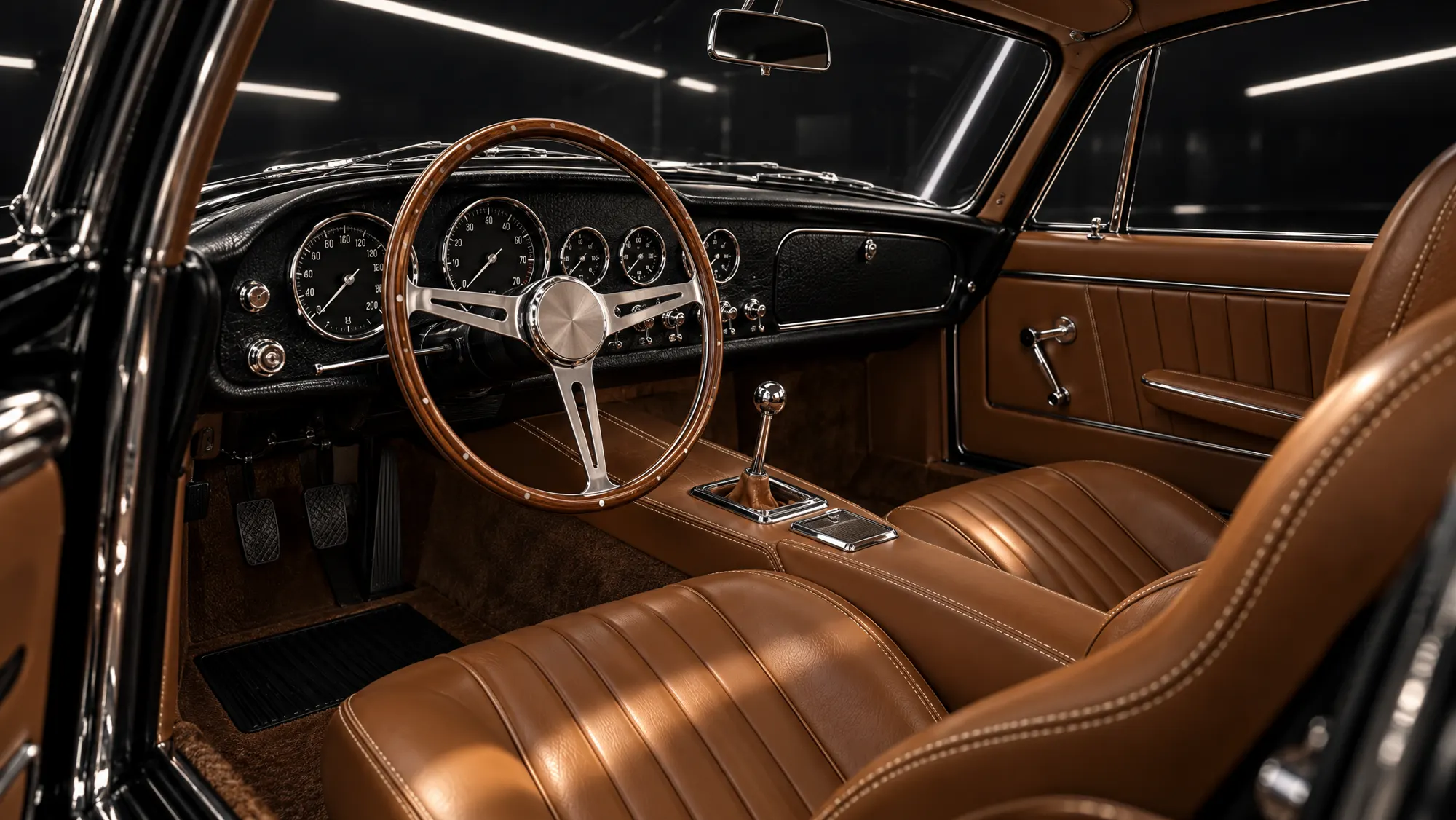
Vacuum the seat, clean it with a mild upholstery cleaner on a damp towel or soft brush, then blot the moisture back out and let it dry with the doors open. The trick with cloth is to use far less liquid than you think you need, because the foam underneath holds on to water.
Cloth seats are forgiving, but two things can go wrong: you can leave a water ring, and you can get liquid where it doesn’t belong. This guide covers how to avoid both.
Quick facts
- Time: Part of an afternoon for a full set of seats, plus drying time.
- Difficulty: Easy.
- Good conditions: A dry day, with shade and moving air.
What you need
- A vacuum with a brush attachment and crevice tool
- Upholstery cleaner (what to look for), or a mild soap solution made for upholstery or carpet
- A soft upholstery brush
- Clean microfiber towels
- A spray bottle of plain water
- A wet/dry vac or spray extractor, if you have one
- Gloves, if the label says to wear them
Read this before you spray
The front passenger seat may have a sensor in it. Many cars use one to decide whether the passenger airbag should be on. Mazda’s manual warns that washing the seat or spilling liquid on it can affect the sensor. Hyundai says spilled liquid can trigger the airbag warning light and that the seat should be fully dry before you drive.
The sides of the seat may hold an airbag. Polestar’s manual says never to spray cleaner on the sides of seats fitted with side airbags. Use a cloth dampened with cleaner on those areas instead.
Skip the steam on this one unless your manual allows it. Nissan’s Leaf manual says not to use water or acidic cleaners, including hot steam cleaners, on the seat, and warns this can affect the airbag system. Other makers allow more moisture, so check your own manual. Whichever car you own, the safe habit is the same: keep it barely damp.
How to clean the seats
Chemical safety. Never mix cleaners, and keep bleach out of the car. The Washington State Department of Health warns that bleach mixed with ammonia produces toxic chloramine gases and that bleach mixed with acids gives off chlorine gas. Keep the doors open while you work, and follow the label.
- Vacuum thoroughly. Polestar’s manual starts here too. Use the brush attachment on the faces of the seat and the crevice tool in the seams, where crumbs and grit collect.
- Test your cleaner. Try it in a hidden spot, such as the back of a seat base, and let it dry. Kia’s manual advises testing all cleaners on a concealed area, and it warns that using anything but recommended cleaners can affect the fabric’s appearance and fire-resistant properties.
- Work one panel at a time. Do the whole seat base or the whole backrest, seam to seam. Polestar recommends cleaning all the upholstery even if only a few spots are dirty, to avoid permanent water marks.
- Apply cleaner lightly. Mist your brush or towel, not the seat. Follow the label on how long it should sit.
- Agitate gently. Use light circles with a soft brush until the dirt starts to lift. Don’t scrub the surface fuzzy.
- Lift the dirt out. Wipe with a clean, damp towel, or use an extractor if you have one. Polestar’s manual recommends a spray extraction cleaner to pull out the washing fluid.
- Blot it dry. Press a dry towel into the fabric and keep moving to clean sections of the towel until it stops picking up moisture.
- Let it dry with air. Leave the doors or windows open. Don’t drive with anyone in the passenger seat until that seat is dry.
Dealing with stains
Speed matters more than product. Kia’s manual says to remove fresh spots right away with a fabric spot cleaner, and Polestar says to treat stains right away.
| Stain | First move |
|---|---|
| Fresh liquid spill | Blot with a dry towel. Press, don’t rub. |
| Coffee, soda, juice | Blot, then treat with upholstery cleaner on a damp towel. |
| Mud | Let it dry completely, brush it off, vacuum, then clean what’s left. |
| Oil or grease | Blot and use a fabric spot cleaner. Polestar warns oil can be hard to remove. |
| Dye from jeans | Clean the panel with upholstery cleaner. Polestar notes colored fabrics such as jeans can stain upholstery. |
| Pet hair | Handle this before any liquid. These tricks for getting dog hair out help. |
| Vomit | It needs its own approach. Follow the vomit cleanup steps. |
Whatever the stain, work from the outside edge toward the middle so it doesn’t spread. If a stain is still there after two gentle tries, stop. Polestar’s manual warns that scraping or rubbing a stain can destroy the upholstery and that strong solvents can damage it too.
Common mistakes
- Soaking the seat. Water sinks into the foam, takes a long time to dry, and can bring a stain back up to the surface.
- Spot cleaning only. You get a clean circle with a ring around it.
- Spraying the seat sides. This is where a side airbag can be.
- Using whatever’s under the sink. Stain removers and strong solvents can damage upholstery.
- Closing the car up while it’s damp. That’s how musty smells begin.
- Hiding the problem with a seat cover. Mazda warns that a seat cover on the front passenger seat can stop the sensor from reading correctly, and Hyundai says to use original items only.
- Pulling the seats out to clean them. You almost never need to, and removing a car seat is a serious job with airbag wiring involved. Polestar’s manual even says not to remove the upholstery during cleaning.
When to hire a pro
Call a detailer if the seats smell, if something soaked deep into the foam, or if you’ve tried twice and the stain won’t budge. Extractors flush the fabric and pull the water back out in a way towels can’t match.
If the airbag warning light comes on after cleaning, that’s not a job for a detailer. Let the seat dry completely and restart the car. If the light stays on, take the car to a dealer or qualified repair shop.
For stains that have beaten you, find a detailer near you.
Sources (6)
- ownersmanual.kia.com/full_webhelp/MV1/2024/en_US/topics/t00884.h...
- polestar.com/uk/manual/polestar-2/2023/article/e571bc9e2...
- nissan.com.mt/ownership/owners-manuals/manuals.html/iom/l...
- mazdausa.com/static/manuals/2025/cx-5/contents/03040704....
- ownersmanual.hyundai.com/full_webhelp/NE1a/2025/en_US/id38b37201c66....
- doh.wa.gov/YouandYourFamily/HealthyHome/Contaminants/B...