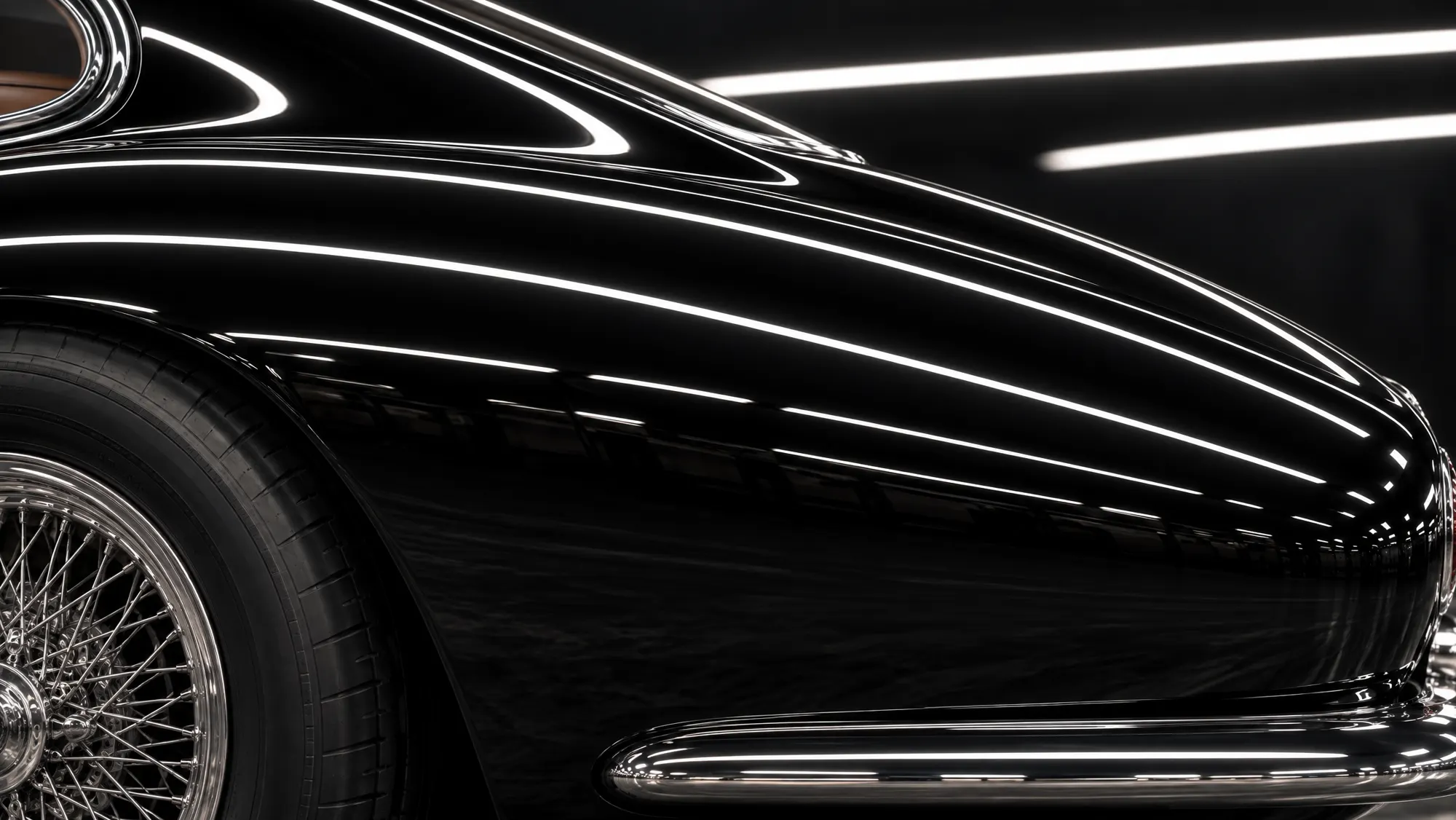
Swirl marks are caused by grit being dragged across your paint, most often while you wash or dry the car. Each pass leaves fine scratches in the clear coat, and over time they build into that spider-web haze you see in direct sun.
The good news is that swirls are usually shallow. The less good news is that many of them come from the very act of trying to keep a car clean.
The most common causes
Dirty wash tools. This is the big one. Mitts, sponges, and buckets hold onto grit from earlier washes. Once a particle is trapped between the mitt and the paint, you’re rubbing it across the panel with every stroke.
Skipping the pre-rinse. If you start scrubbing before loose dirt is off, the mitt picks it up immediately. A pre-wash loosens contaminants before anything touches the paint.
Washing with one bucket. The same water that rinses your mitt puts the dirt right back on it. That’s why the two-bucket wash method exists.
Scrubbing in circles. Going around in circles drags contaminants over the same spots again and again. Straight lines are the usual advice.
Drying the wrong way. Abrasive towels and too much pressure can mark paint just as easily as washing can. So can a dropped towel you keep using.
Wiping dust off dry paint. A quick swipe with a rag or sleeve pushes dust straight across the clear coat. Car covers over dusty paint can do the same thing as they shift around.
Handling you never saw. One car wash trade article points out that a car’s paint starts picking up tiny scratches early, including during dealership handling. A new car can already show marks under a detailing light.
If several of those sound familiar, these common detailing mistakes are worth a read too.
Do automatic car washes cause swirl marks?
This one is genuinely argued, and both sides have something to sell.
Chemical Guys, which sells detailing products, says automatic wash brushes collect dirt from many vehicles and can pass it to yours. Professional Carwashing & Detailing, a car wash trade publication, ran an article flatly arguing that automatic washes don’t cause swirls, that modern foam brushes stay clean under constant water, and that hand washing is the more likely source.
The fair reading is that equipment condition and technique matter more than the label on the building. Old stiff brushes and poor maintenance carry real risk, and a careless hand wash does too. For the full comparison, see are automatic car washes bad for your paint.
Why they look circular
Swirls aren’t actually perfect circles. According to that same trade article, the scratches are random in size and direction. They look circular because you’re seeing them around a round light source, usually the sun, and only the scratches facing the light catch your eye.
That’s also why they can seem to appear right after a wash. Clean paint and bright sun simply show what was already there.
Swirl or something deeper?
Check the car in direct light. Then try the fingernail test: run a nail gently across the mark.
If your nail glides over it, you’re likely looking at a light scratch in the clear coat. If your nail catches, the scratch is deeper, and it may need more than a light polish.
How to stop new swirls
You can’t avoid them completely, but you can slow them down a lot.
- Keep your mitts, towels, and buckets clean, and retire anything that’s been dropped.
- Rinse first, and keep clean water for the mitt.
- Use soft microfiber for washing and drying. The wipes and towels page covers what to look for.
- Blot or glide with light pressure. Let the towel do the work.
- Keep protection on the paint. It adds a sacrificial layer and reduces friction when you wash.
Getting rid of the swirls you have
Soap won’t touch them. Swirls are physical scratches, so the fix is to level the clear coat around them.
That’s polishing. A machine and a cutting compound or polish remove a very thin layer of clear coat until the scratch edges disappear. Because you’re removing material, there’s a limit to how often it can be done, and thin paint can’t take much. A pro will often measure clear coat thickness first.
Wax and glazes can make swirls look better for a while, but the effect fades as the product wears off. A ceramic coating won’t remove them at all. It seals them in unless the paint is corrected first, which is one reason prep matters so much if you’re weighing whether ceramic coating is worth it.
If you’d rather not take a machine to your own paint, a paint correction is a job for a detailer. You can find one in the directory.